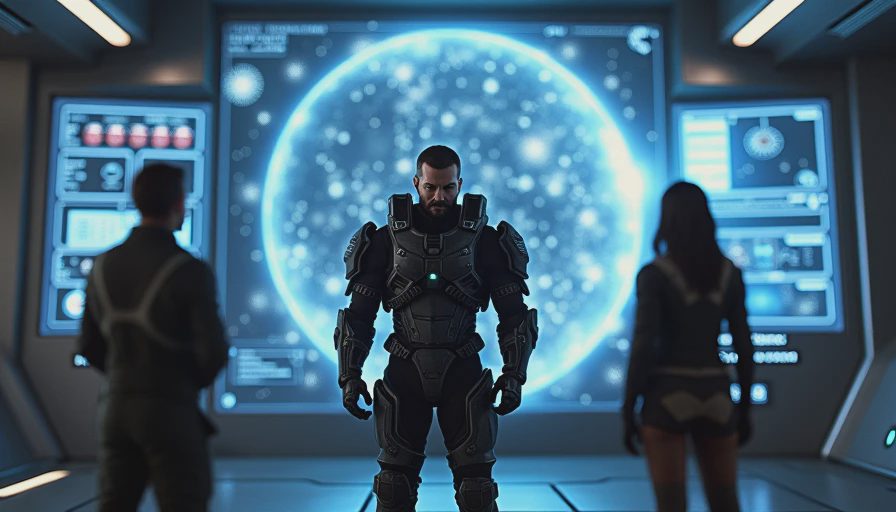
I went back to Mass Effect 2 recently, expecting the combat to feel clunky and the dialogue to feel like a product of its time. What I found was the opposite: the character writing still carries it. In 2026, Mass Effect 2 remains one of the best examples of how to build a crew you actually care about.
That’s not a small thing. Most RPGs give you companions like they’re handing out party favors — a dozen faces, a few personality traits, and a loyalty quest that boils down to “kill this guy and I’ll like you more.” Mass Effect 2 did something different. It built its entire structure around the people you travel with, and it trusted you to care about them.
I replayed the whole thing over three weeks, playing an hour or two most nights. Here’s what held up and what didn’t.
The Normandy Feels Like a Real Crew
The first thing that struck me was how well the game establishes your companions as people before it asks you to care about their problems. You don’t just recruit Garrus because he’s a good sniper. You recruit him because you remember him from the first game, or because his introduction on Omega — the vigilante known as Archangel — is genuinely compelling. Same with Tali, Wrex, and even the new faces like Mordin, Jack, and Thane.
Each companion gets a personality, a history, and a reason to be on your ship. They talk to each other. They have opinions about your decisions. They don’t just stand in their rooms waiting for you to click on them. The Normandy feels alive in a way that few game hubs do, even now.
The Loyalty Missions Are Still the Gold Standard
The loyalty missions are the heart of Mass Effect 2. Each one is a self-contained piece of character drama — a story about that companion’s past, their regrets, and what they need to resolve before the final mission.
Mordin’s loyalty mission is about his guilt over the genophage, the biological weapon he helped create. Tali’s is about family and the weight of expectation. Thane’s is about fatherhood and forgiveness. None of these are simple fetch quests. They’re character studies, and they work because the writing takes them seriously.
What’s remarkable is that these missions are optional. You can skip them entirely and still finish the game. But you won’t, because the game makes you want to do them. Not for the rewards — the rewards are useful but not essential — but because you want to know these people better. That’s a rare kind of design.
The Suicide Mission Still Works
The final mission — the suicide mission — is still one of the best endings in gaming. Not because it’s spectacular, though it is. Because it’s built on the relationships you’ve spent the whole game developing.
Without spoiling anything, the mission asks you to assign your crew to specific tasks. The right choice depends on knowing who they are and what they’re good at. If you’ve done the loyalty missions and paid attention, you can make smart calls. If you haven’t, people die. The stakes are emotional, not mechanical. And that’s why it still lands all these years later.
What Feels Dated
Now I have to be honest about the parts that don’t hold up.
The Combat Is Serviceable, Not Special
The cover shooting in Mass Effect 2 was never the main draw, and in 2026 it feels even more dated. Enemies are bullet sponges. The AI isn’t great. The weapons lack impact. The thermal clip system — a controversial change from the first game — still feels like a step backward from the heat-based cooldowns of the original.
I found myself tolerating the combat rather than enjoying it. It’s not broken, but it’s not why you play Mass Effect 2. You play it for the story, the characters, and the decisions. The shooting is just the thing you do between conversations.
The Planet Scanning Is Still Tedious
I have to mention the planet scanning. It was bad in 2010, and it’s bad now. You fly your ship to a planet, hold a button, and watch a needle wobble while you launch probes at resource deposits. It’s slow, repetitive, and utterly disconnected from the rest of the game.
The only good thing I can say about it is that it’s optional — you don’t need to scan every planet to finish the game. But if you want the best ending, you’ll need to do at least some of it. It’s padding, pure and simple.
The Main Plot Is a Bridge
Mass Effect 2’s main story is thin. It’s mostly about recruiting people and solving their problems. The actual threat — the Collectors — is a side note until the final act. If you’re looking for a tight narrative arc, you might be disappointed.
But here’s the thing: the main plot doesn’t matter that much. Mass Effect 2 is a character-driven game, and it knows it. The story is the crew. The ending works because you care about the people, not because the plot was particularly deep.
Why It Still Matters
Mass Effect 2 proves that character writing can carry a game even when the mechanics are average. That’s a lesson modern RPGs have largely forgotten.
Think about the big RPGs of the last few years. How many companions do they give you? Ten? Twelve? More? And how many of those companions do you actually remember? I’ve played games with enormous party rosters where I couldn’t tell you a single distinctive thing about half the characters. They’re interchangeable, designed to fill roles rather than to feel like people.
Mass Effect 2 gives you ten companions, and I remember all of them. Not just their names — their personalities, their conflicts, their voices. Mordin’s rapid-fire speech and his quiet guilt. Jack’s rage and the vulnerability underneath. Grunt’s search for a reason to exist. These are characters, not archetypes.
The Lesson for Busy Players
Here’s the practical takeaway for someone with limited gaming time: Mass Effect 2 is worth your time, but you should play it lean.
Skip the planet scanning. Don’t worry about every side quest. Focus on the recruitment missions and the loyalty missions — that’s where the game’s real value is. The main plot will take care of itself, and the ending will land harder if you’ve spent time with the crew.
You can finish it in about 30 hours if you’re focused. That’s a month of evening sessions for a busy adult. It’s a real commitment, but it’s one that pays off in a way most long games don’t.
Would I Recommend It in 2026?
Yes. Not because it’s flawless — it isn’t. Not because the combat holds up — it doesn’t. But because the character writing is still the best in the genre, and that’s enough.
If you’ve never played Mass Effect 2, you need to play the first game first. Not because the story is essential — though it helps — but because the relationships you build in Mass Effect 1 make Mass Effect 2 hit harder. The choices you make carry over, and the payoff is worth the setup.
If you’ve already played it and you’re thinking about a replay, do it. But skip the parts that feel like work. Don’t scan every planet. Don’t chase every upgrade. Just spend time with the crew. Do the loyalty missions. Talk to everyone after every major story beat. The game rewards that kind of attention.
What Mass Effect 2 Taught Me
The reason Mass Effect 2 still matters isn’t nostalgia. It’s craft. The writers understood that players don’t care about a story unless they care about the people in it. They built the entire game around that truth, and it worked.
Modern RPGs could learn from that. Instead of giving us more companions, give us better ones. Instead of padding the runtime with filler, spend that time deepening the relationships that make the story matter. Character writing isn’t a bonus feature. It’s the core of the genre.
Some games age. Some games deepen. Mass Effect 2 did both — the combat got older, but the characters got richer. And that’s why I’ll keep coming back to the Normandy, even when the shooting feels like a relic.
The commander is waiting. The crew is ready. And the collector base is still out there, silent and patient, waiting for one more run.


No letters yet — pray write the first.