
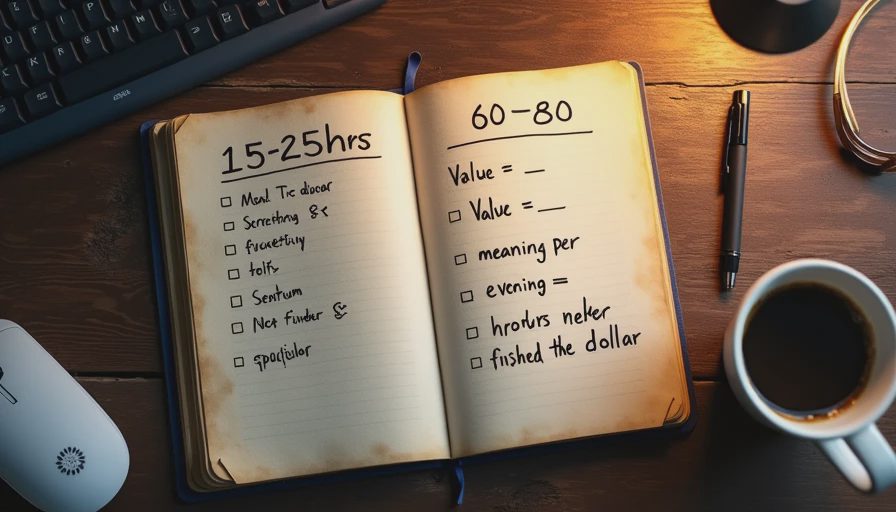
The best 15–25 hour games for people with real jobs share one thing: they understand that your time is already spoken for. You don’t need a game that lasts 80 hours. You need one that lasts a week or two, gives you a complete experience, and doesn’t punish you for having a life.
I learned this the hard way. For years, I bought massive open-world RPGs because they felt like better value. More hours per dollar, right? But the truth is, I rarely finished them. I’d play for twenty hours, get distracted by work and errands, and come back weeks later having forgotten the story and the controls. Then I’d start over, play another ten hours, and repeat the cycle. The game wasn’t bad. It just didn’t fit my actual life.
A 15–25 hour game is different. It’s long enough to build a world, develop characters, and deliver a real emotional payoff. But it’s short enough that you can actually see the credits. For most working adults, that’s about two to three weeks of evening sessions. That’s sustainable. That’s respectful.
Why This Length Works
It Matches the Adult Attention Span
When I was in college, I could lose a weekend to a 60-hour RPG without blinking. Now I have maybe two free evenings a week, and each one comes after a full day of work, cooking, and the small logistics of being alive. I don’t have the mental energy for a game that demands I remember forty quests, twelve characters, and a crafting system.
A 15–25 hour game respects that. It keeps its story focused. It doesn’t pad its runtime with five hours of tutorial or thirty minutes of walking between objectives. Every hour moves something forward.
It Gives You the Satisfaction of Finishing
There’s a real psychological benefit to finishing a game. It closes the loop. It lets you move on without guilt. When I finish a 15-hour game in two weeks, I feel like I actually accomplished something with my leisure time. When I abandon a 70-hour game at hour 35, I feel like I failed — even if the game was good.
That’s not a small thing. The backlog guilt is real. Finishing games, even short ones, helps clear that mental clutter.
What I Look For in This Range
Before I recommend anything, I apply a few standards. Not every short game is good, and not every good game fits a busy schedule.
Tight Pacing
The game needs to start moving early. No five-hour prologue. No endless tutorial. I want to be in the world, making decisions, within the first thirty minutes.
Natural Session Boundaries
A busy adult plays in chunks — forty-five minutes here, an hour there. The best short games are built around missions, chapters, or save points that let you stop without losing progress. You shouldn’t have to choose between losing an hour of progress and staying up until 1 a.m.
No Filler
The 15–25 hour range is great because it forces developers to cut the fat. There’s no room for ten hours of collectibles or copy-paste side quests. Every system, every level, every story beat has to earn its place.
The Best 15–25 Hour Games
Narrative-Driven Experiences
If you want a story that respects your time and your intelligence, start here.
The Last of Us Part I — Around 15 hours. A masterclass in pacing. Every chapter advances the story, builds the characters, and ratchets up tension. It’s emotionally heavy, but it never wastes your time. Perfect for playing one chapter a night.
A Plague Tale: Requiem — Roughly 15–20 hours. A stealth-adventure with a strong sibling relationship at its core. The pacing is tight, the world is gorgeous, and the ending lands. It’s linear but never feels restrictive.
Hellblade: Senua’s Sacrifice — Closer to 8 hours, but I’m including it because it’s a complete, unforgettable experience. Play it with headphones. It’s intense, focused, and over before it wears out its welcome.
Systems-Driven Games
These games respect your intelligence by giving you tools and letting you solve problems your way.
Dishonored — 12–15 hours. Every mission is a compact sandbox. You can go in loud or silent, through the front door or across the rooftops. The game trusts you to read the level and make a plan. It’s the opposite of a checklist.
Prey — 20–25 hours. A modern immersive sim set on a space station. It starts a little slow, but once it opens up, it gives you incredible freedom. You can finish it in a couple of weeks and still be thinking about its ending.
Control — 15–20 hours. A third-person shooter with a weird, wonderful setting. The combat is satisfying, the lore is rich, and it doesn’t overstay its welcome. The Ashtray Maze alone is worth the time.
Indie Gems
Indie developers often understand time value better than big studios, because they can’t afford to pad.
Tunic — 15–20 hours. A Zelda-like with a brilliant manual system. It respects your intelligence and your curiosity. The combat is tough but fair. And the ending recontextualizes everything.
Death’s Door — 10–12 hours. A tight action-adventure with a melancholy soul. The combat is simple but satisfying, the world is memorable, and it ends exactly when it should.
The Forgotten City — 5–8 hours. A time-loop mystery set in an ancient Roman city. It’s short, but every minute is dense with discovery. If you want a game you can finish in a weekend and think about for a month, this is it.

What to Avoid
Now for the hard part: the games that look like they fit but don’t.
The 20-Hour Game That Feels Like 70
Some games are technically short but feel endless. They have slow menus, repetitive combat, or story beats that go nowhere. Length alone isn’t a virtue. A boring 15-hour game is worse than an engaging 40-hour game.
The “Short” Game With a Hidden Grind
Some indie games pad their runtime with backtracking and item hunting. If you find yourself walking the same corridor for the fourth time, that’s not pacing. That’s padding.
The Game That Respects Your Time Too Much
This is rare, but it happens. Some games are so streamlined they feel empty. They end before you’ve had time to care. The sweet spot is 15–25 hours because it gives the story room to breathe without bloating.
My Personal Approach
I keep a short list of 15–25 hour games on my phone. When I finish one, I add another. It’s not a backlog — it’s a rotation. I play one longer game at a time, and I surround it with shorter, tighter experiences that I can actually finish.
This approach has changed how I feel about gaming. I finish more games now than I did in my twenties. I remember them better. I talk about them more. I’m not drowning in half-finished epics. I’m actually playing, and actually finishing.
If you’re an adult with a real job and a real life, try it. Pick one game from this list. Finish it. See how it feels to see the credits roll without guilt or exhaustion.
The next time someone tells you a 100-hour game is “great value,” remember: value isn’t hours per dollar. It’s meaning per evening.



No letters yet — pray write the first.