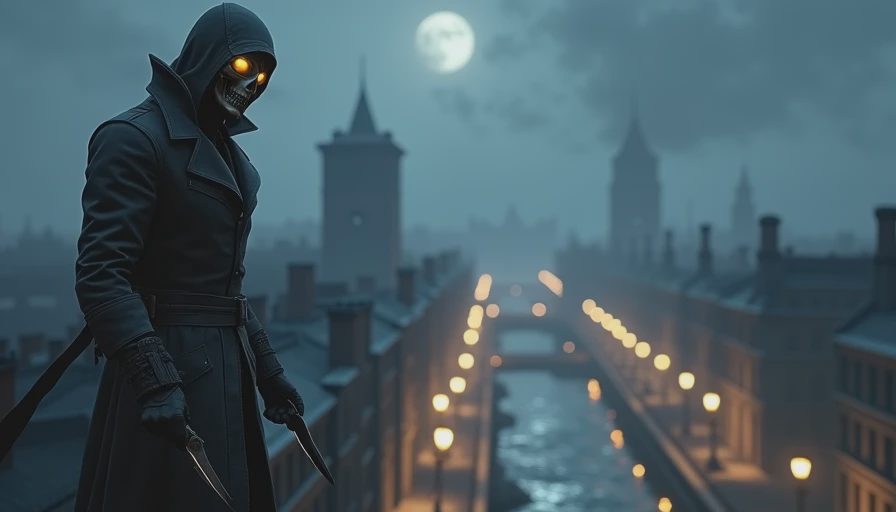
I replayed Dishonored last month for the first time in nearly a decade. I expected to enjoy it. I didn’t expect it to feel more relevant in 2026 than it did in 2012. But that’s exactly what happened.
When Dishonored first came out, I played it like most people: a stealth game with a revenge plot and a cool mask. I beat it once, experimented with a few powers, and moved on. It was good. I didn’t think about it too much after that.
Replaying it now, as a 34-year-old with fifteen more years of gaming behind me, I see something different. Dishonored isn’t just a good stealth game. It’s a masterclass in respecting the player’s intelligence — and that’s something modern games have quietly abandoned.
What I Remembered vs. What I Found
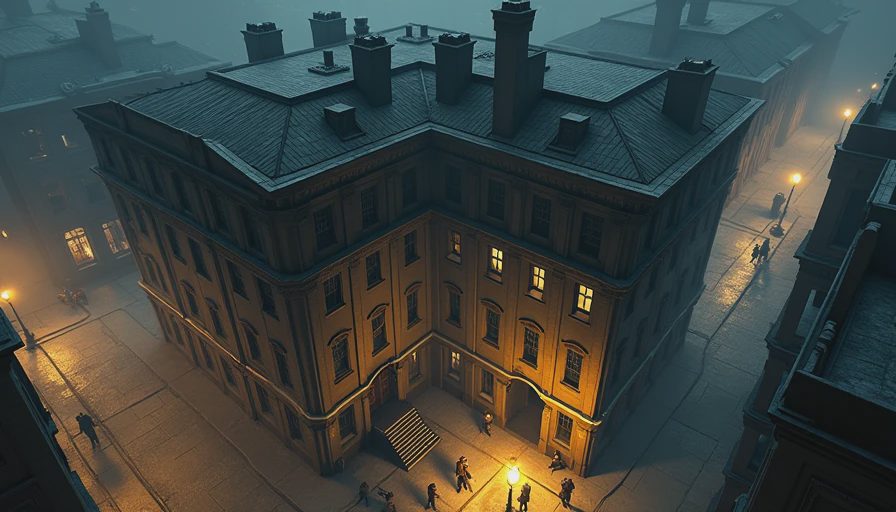
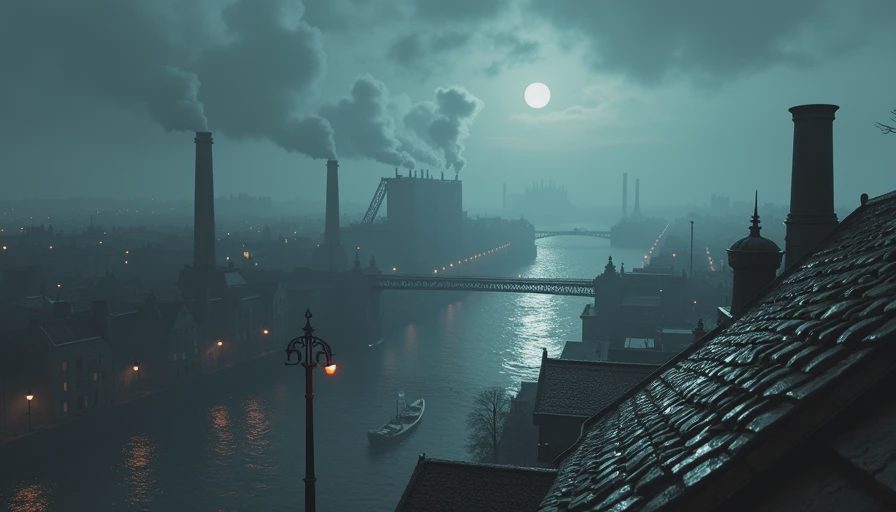
My memories of Dishonored were mostly aesthetic: the oil-painted streets of Dunwall, the whale oil lamps, the rat swarms, the masked figure of Corvo on the rooftop. Those things are still there, and they’re still striking. The art direction holds up better than most games from that era because it leaned into a stylized look instead of chasing realism.
But what I didn’t remember as clearly was how much freedom the game actually gives you. Not fake freedom — not “you can approach this objective in one of three scripted ways.” Real freedom, where the game hands you a target, drops you into a neighborhood-sized sandbox, and says: figure it out.
That kind of trust is rare now. Most modern games are afraid you’ll get lost or frustrated, so they mark a golden path, fill the screen with objective markers, and turn every mission into a checklist. Dishonored doesn’t do that. It assumes you’re paying attention. It assumes you’re curious. It assumes you’re smart enough to read the environment and make a plan.
And honestly? That assumption is a gift.
Level Design That Still Works
Every mission in Dishonored is a compact sandbox. Not an open world — a small, dense space packed with routes, secrets, and possibilities. You can go in loud or silent, through the front door or across the rooftops, killing everyone or touching no one. The game doesn’t judge you for your approach. It just reacts to it.
Take the Golden Cat mission, for example. Your target is in a brothel. You could fight your way through the front entrance. You could possess a fish and swim through the flooded basement. You could climb to the roof and slip in through an open window. You could knock out a patron, steal his clothes, and walk through the front door. You could find a hidden route through the vents. None of these are marked on a map. You have to look for them.
That’s the difference between exploration and navigation. Exploration is about curiosity and discovery. Navigation is about following a line. Dishonored trusts you to explore. Most modern games only ask you to navigate.
The Friction Is a Feature
One thing I noticed on this replay: Dishonored has friction. Real friction. You can fail. You can get spotted. You can miss a non-lethal option because you didn’t look hard enough. You can make a wrong turn and end up in a fight you didn’t want.
Modern games have sanded down this kind of friction. They auto-save every thirty seconds. They give you quest markers and hint systems. They make failure cheap. Dishonored doesn’t. If you mess up, you live with it — or you reload and try again.
That might sound frustrating, but it’s actually what makes the game feel alive. When your choices have consequences, you pay attention. When you pay attention, you notice details. When you notice details, the world feels real. Friction creates presence.
I’m not saying every game needs to be punishing. But the complete absence of friction in modern AAA design has created a generation of games you can sleepwalk through. Dishonored refuses to let you sleepwalk.
What Feels Dated
Now, I’m not going to pretend the game is flawless. It’s not.
The character models are stiff by today’s standards. The dialogue can be flat, especially in the early missions. The first hour is slower than I remembered — there’s a lot of setup before the game really lets you loose. And the chaos system, while interesting, has always been a little blunt.
The Chaos System
Let me talk about that for a second. The chaos system tracks how many people you kill. Kill more, and the world gets darker — more rats, more guards, more despair. Kill fewer, and things stay relatively bright. In theory, it’s a moral system. In practice, it’s mostly a body count.
The problem is that Dishonored gives you so many fun ways to kill people — swarms of rats, razor traps, possessed guards who walk into their own bullets — and then gently punishes you for using them. If you want the “good” ending, you have to play non-lethally, which means ignoring half your toolkit.
I understand what Arkane was going for. Actions have consequences. Violence begets violence. But the binary nature of the system feels dated now. Modern games like Prey — also by Arkane, ironically — handle choice with more nuance.
Would I Recommend It in 2026?
Yes. Unequivocally yes.
Not because it’s perfect. Not because it aged flawlessly. But because it still does something that almost no modern game does: it treats you like an adult. It gives you a problem and lets you solve it. It doesn’t hold your hand, fill your screen with markers, or apologize for asking you to think.
Dishonored is a 12–15 hour game. For a busy adult, that’s a week or two of evenings. And every one of those evenings will ask something of you. Not grind. Not repetition. Attention. Curiosity. Judgment.
That’s a rare thing. And it’s worth your time.
A Small Piece of Advice
If you replay it, try something different from your first run. If you played stealthy before, go loud. If you killed everyone, try a ghost run. The game changes enough to make a second playthrough feel fresh. And if you’ve never played it at all, start now. You don’t need to know anything about the story. Just pick a direction and start exploring.
That’s what the game wants from you. That’s what it’s been waiting for.
What Dishonored Taught Me
The reason Dishonored still feels special in 2026 isn’t nostalgia. It’s contrast. Playing it now, after years of bloated open worlds and hand-holding tutorials, I can see what we lost. We traded player freedom for convenience. We traded friction for comfort. We traded intelligence for accessibility.
I’m not saying accessibility is bad. But there’s a difference between making a game approachable and making it hollow. Dishonored is approachable — anyone can learn its systems in an hour. But it’s not hollow. It’s dense with possibility, and it trusts you to find it.
That trust is what I miss most in modern games. And it’s why I’ll keep coming back to Dunwall, even when the graphics look old and the dialogue feels stiff.
Some games age. Some games deepen. Dishonored deepened.

No letters yet — pray write the first.