
The games I quit in the first three hours taught me more than the ones I finished. Not because they were bad — most of them weren’t. But because something in those opening hours told me the game wasn’t going to respect my time, my patience, or my evening.
I used to feel guilty about quitting early. I’d tell myself I hadn’t given the game a fair chance. I’d push through another few hours, hoping it would click. Sometimes it did. Most of the time it didn’t. And every time I forced myself to keep playing a game I wasn’t enjoying, I ended up resenting it more.
Now I see early quitting differently. It’s not a failure of patience. It’s a filter. The first three hours are a promise about what the rest of the game will feel like. If that promise is broken, or if it’s a promise I don’t want to keep, walking away is the smartest thing I can do.
Here are the games I quit in the first three hours, and what each one taught me.
The Open-World RPG With Too Many Systems
I won’t name this one, but you know the type. It launched a few years ago with a massive marketing campaign. The reviews were glowing. The world was enormous. The skill trees had skill trees.
I bought it on a Friday night, made a cup of coffee, and settled in. By hour one, I had been introduced to crafting, upgrading, looting, rarity tiers, faction reputation, a dialogue system with stats, and a map so full of icons it looked like someone had spilled a bag of Skittles on it.
By hour three, I had spent more time in menus than in the actual world. I wasn’t playing a game. I was managing a spreadsheet with a fantasy skin.
Lesson: If a game front-loads complexity instead of discovery, it’s not for me. A good game introduces systems gradually, letting me learn through play. A bad one dumps everything on me at once and calls it depth.
I quit that game and never looked back. I’m sure it gets better after ten hours, like everyone said. But I don’t have ten hours to spend waiting for a game to become fun. Do you?
The “Prestige” Story Game With No Gameplay
This one was harder to quit because everyone I knew loved it. It won awards. Critics called it “a triumph of interactive storytelling.” I felt like I was supposed to like it.
The first hour was a cutscene. Then a slow walking section where I held the stick forward while two characters talked. Then another cutscene. Then a brief moment where I pressed a button to lift a log. Then more walking. Then more talking.
By hour three, I realized I wasn’t playing. I was watching a movie with extra steps. And not a great movie — a movie that kept pausing to ask me to carry things.
Lesson: A game should feel like a game in the first hour. Not like a long tutorial for a future that never arrives. If I want to watch a story, I’ll watch something. If I’m playing, I want to play.
That experience taught me to be wary of the phrase “it’s more about the story.” A great story and great gameplay aren’t opposites. The best games have both. If a game tells me to ignore the gameplay because the story is good, something is wrong.
The Live-Service Looter
I downloaded this one because it was free. A friend said we could play together. The pitch was simple: fast combat, cool loot, endless progression.
The first three hours were a blur of menus, daily tasks, battle passes, season rewards, and loot boxes. I killed things, but I wasn’t sure why. I collected gear, but the numbers just got slightly bigger. Every thirty minutes, the game presented me with a new screen full of things to unlock, most of them cosmetic, all of them designed to keep me logging in.
By hour three, I realized I wasn’t having fun. I was being managed. The game didn’t care if I enjoyed myself. It cared if I came back tomorrow.
Lesson: If a game is designed to keep you logging in rather than to be good, walk away. Free doesn’t mean costless. A free game that wastes three hours of your week is more expensive than a $70 game you actually love.
I deleted it that night. My friend still plays, and I’m happy for him. But I don’t miss the daily grind. Not even a little.
The Hard Game That Never Explains Itself
This one is tricky, because I love hard games. I grew up on them. I’ve beaten Dark Souls, Sekiro, and Elden Ring. I understand the value of struggle.
But there’s a difference between a game that’s hard and a game that’s obscure. One respects your intelligence. The other wastes your time.
The game I quit was a well-reviewed indie action game. The combat was supposed to be deep and rewarding. But the tutorial was a text dump. The systems were never explained. I died repeatedly, not because I was learning, but because I didn’t understand the rules.
After three hours, I looked up a guide and realized I had been playing wrong the whole time. Not because I was bad — because the game never told me how to play. That’s not difficulty. That’s poor design.
Lesson: A hard game should teach through play. If I have to watch a YouTube video to understand the basics, the game has failed me. I’m not against complexity. I’m against obscurity dressed up as depth.
I quit that game, but I might go back one day with a guide. The difference is that now I know what I’m getting into. The first time, I was just frustrated and confused. That’s not a good way to spend an evening.
The Open-World Game With Nothing New to Say
This one was the hardest to quit, because it was a sequel to a game I loved. The first game was fresh, exciting, and full of ideas. The sequel promised “bigger and better.”
What I got was the same game with a new map. Same combat, same mission structure, same enemy types, same tower-climbing, same bandit camps. It wasn’t bad. It was just more.
By hour three, I realized I had already played this game. It was wearing a different coat, but the bones were identical. The spark was gone.
Lesson: A sequel should justify its existence. If it’s just the same game again, I can save my money and replay the original. Bigger is not always better. Sometimes bigger is just bigger.
That was a sad quit. I wanted to love that game. But wanting to love something isn’t the same as loving it. And forcing myself to play it wouldn’t bring the spark back.
What Early Quits Are Not
I want to be clear about something. Quitting a game in the first three hours is not a moral judgment. It’s not saying the game is bad, or that the people who made it failed, or that the people who love it are wrong. It’s just saying: this game isn’t for me, right now, and I’d rather spend my time elsewhere.
That’s a legitimate choice. In fact, it’s an adult choice. When you’re young and have unlimited time, you can afford to push through every slow opening and every confusing tutorial. When you’re older, you can’t. Your free time is too scarce to spend on games that don’t grab you.
The Guilt Trap
The hardest part of quitting early is the guilt. There’s a voice in your head that says: “You should give it more time. You paid for it. Everyone else likes it. Maybe you’re wrong.”
That voice is not your friend. It’s the voice of sunk cost fallacy, social pressure, and misplaced obligation. You don’t owe a game your time just because you bought it. You don’t owe it your evenings just because other people like it. Your only obligation is to spend your free time in a way that feels good to you.
If a game doesn’t feel good in the first three hours, it probably won’t feel good at hour ten. Walk away. No guilt. No second-guessing. Just a clear decision that your time is worth more than this.
My New Rule
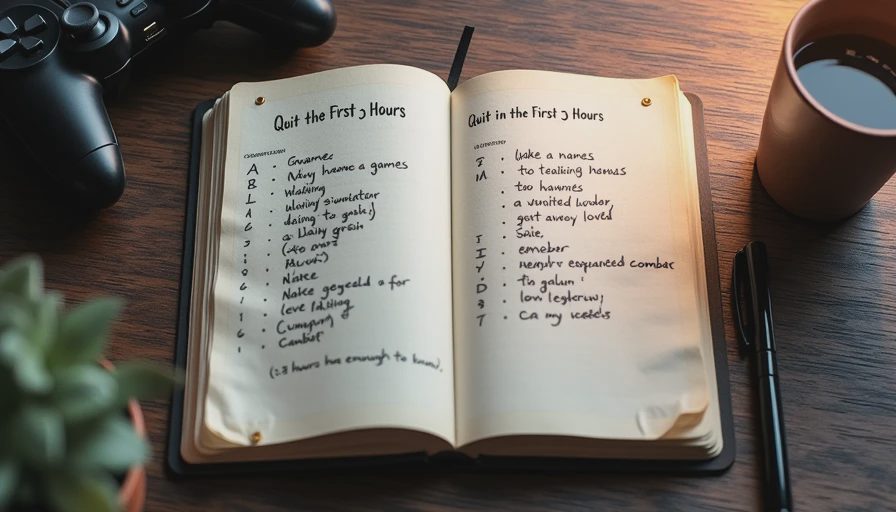
I now give every new game three hours. Not five. Not ten. Three. If it hasn’t given me a reason to care by then, I quit.
Three hours is enough time for a game to show me its world, its combat, its tone, and its intentions. If none of that has grabbed me, the game hasn’t done its job. That’s not my failure. It’s the game’s.
This rule has changed how I play. I finish more games now, because I only stick with the ones that earn my attention. I feel less guilt, because I know I gave each game a fair chance. And I enjoy my gaming time more, because I’m not spending it on games that don’t respect me.
Some games meet you where you are. Some just want your weekend. And some, you learn in three hours, want nothing from you but your time. Those are the ones to leave behind.




No letters yet — pray write the first.